
Wood fences don’t last forever. But most fail prematurely.
The number one reason a wood fence fails early isn’t weather. It isn’t the wood type. And it isn’t bad luck.
It’s rot — and almost all of it is preventable.
We’ve built and repaired wood fences in the East Bay for 34 years. We’ve seen this happen many times. A homeowner gets a new fence. Five or six years later, boards are soft. Posts are leaning. The whole thing has to come down. It did not have to end that way.
In this guide, we show you how rot starts and where it hits hardest. We also share what you can do to stop it — on a new fence or one you already have.
What Is Wood Fence Post Rot?
Rot is what happens when wood breaks down from moisture and fungus. When wood stays wet for too long, it becomes a good place for fungus to grow. That fungus eats the wood fibers. Over time, the wood gets soft, weak, and crumbly.
You’ve probably seen it. A fence board that looks fine on the outside but caves in when you press it. A post that used to be solid and now wiggles. A kickboard at the bottom of a fence that’s turned dark and spongy.
That’s rot.
The bad news: once rot is deep, there is no fixing it. The wood has to be replaced.
The good news: rot is slow. It gives you warning signs. And it’s very easy to prevent if you know what to do.
Where Rot Starts on a Wood Fence
Rot doesn’t attack a fence evenly. There are some areas of the fence that are more prone to rot than others due to a lot of concentrated moisture.
The Bottom of Fence Posts
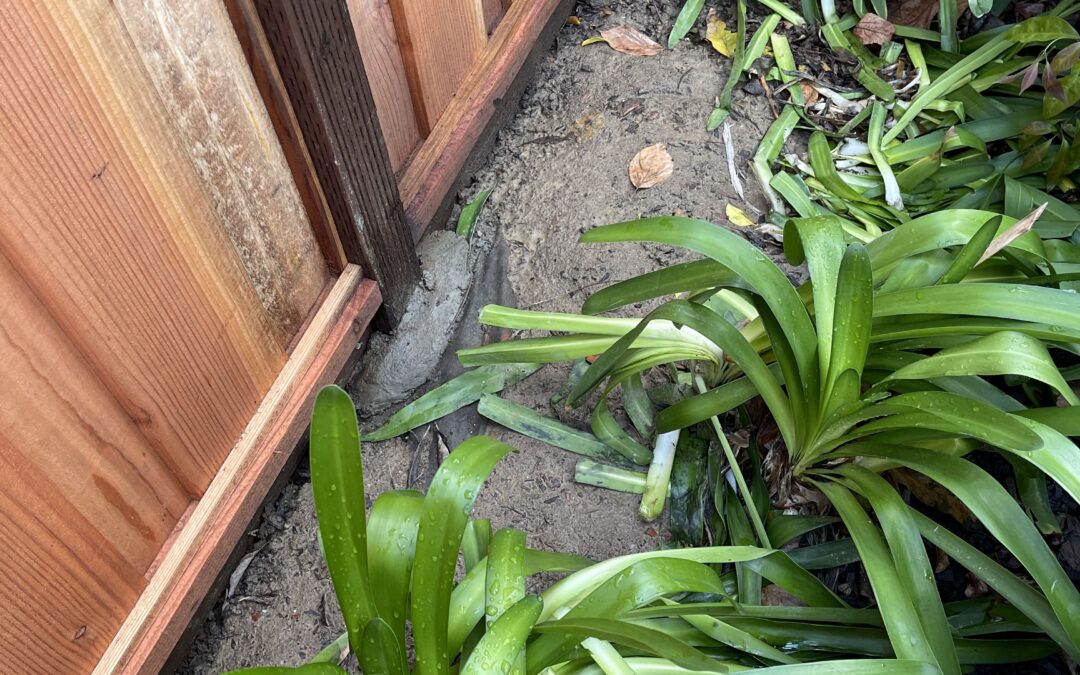
Typically fence posts are set in concrete. This causes a problem because water that tries to drain out of the post gets trapped. Since the post never dries out, it causes premature rot.
If the concrete around the post is flat or slopes toward the post, water pools right at the base. It soaks into the wood. Fungus grows. The post rots from the inside out.
By the time you see a leaning post, the rot is already deep. There may be almost nothing left below the ground.
The Bottom Rail and Kickboard
The bottom rail is the horizontal piece that connects the posts near the ground. The kickboard — also called a gravel board — is the board that runs along the base of the fence, just above the soil.
These pieces sit low. They’re close to the ground. They catch water from rain and sprinklers. They don’t dry out as fast as the boards higher up.
This is why the bottom of a fence almost always rots before the top.
End Grain on Boards
Wood has a grain — the lines you see running through it. At the cut ends of boards, that grain is exposed. This is called end grain.
End grain absorbs water like a sponge. It pulls moisture in fast and lets it go slowly.
Even sealed boards can rot quickly at the ends if the sealer wears off and the end grain is left open.
Spots Where Water Collects
Anywhere water sits and doesn’t drain is a rot risk. This includes:
- Low spots in the yard where water puddles after rain
- Areas where sprinkler heads spray directly onto the fence
- Places where plants or mulch are pressed up against the fence boards
7 Ways to Prevent Wood Fence Rot
Here’s what actually works. Some of these apply when you’re building a new fence. Others you can do right now on your existing fence.
1. Start With the Right Wood
Not all wood rots at the same rate. The wood you choose — or the wood your contractor uses — makes a big difference from day one.
Redwood is the best choice for the Bay Area. It contains natural oils that resist rot and insects. The heartwood — the darker center of the log — is most of all rot-resistant. It costs more than other options. But it starts with a big head start.
Pressure-treated Douglas Fir has been treated with a copper oil that resists rot. It’s a solid choice for ground-contact parts like posts and kickboards.
2. Make Sure Posts Are Set Correctly
Post setting is the single most important factor in how long a fence lasts. And it’s something most homeowners never see.
Here’s what proper post setting looks like:
- Posts go into the ground at least one-third of their total length. For a 6-foot fence, that means at least 2 feet below the surface.
- Concrete surrounds the post below ground. This holds the post steady and helps seal out soil moisture.
- The top of the concrete is crowned — sloped away from the post on all sides — so water runs off instead of pooling at the base.
- Most importantly, you create a drainage system at the bottom of the post to release the water.
3. Use a Kickboard
A kickboard is a sacrificial board. It runs along the base of the fence, between the posts, close to the ground.
Its job is to take the moisture and damage that would otherwise hit your vertical fence boards.
Without a kickboard, your fence boards take all of that moisture directly. When they rot, you’re looking at a much bigger repair.
Always make sure your fence has a kickboard.
4. Seal the Wood
Sealer is a protective layer that goes on the surface of the wood. It slows moisture from getting in. It also protects against UV rays, which dry wood out and cause it to crack.
A good oil-based wood sealer applied at installation — and reapplied every three to five years — can add years to your fence’s life.
Pay close focus to the cut ends of boards. End grain absorbs moisture fast. A thick coat of sealer on every cut end makes a real difference.
When you’re reapplying sealer, clean the fence first. Dirt and mildew block the sealer from getting into the wood. A simple wash with a garden hose and a brush is enough.
5. Fix Your Sprinklers
This one is simple and often overlooked.
Sprinklers that spray onto your fence cause rot faster than almost anything else. The water hits the wood over and over, day after day. The wood never fully dries out.
Fungus moves in.
Walk along your fence on a day when the sprinklers run. Look for heads that spray onto the fence boards or posts. Adjust them so the water lands on the lawn or garden — not the fence.
This one change can add years to your fence. It costs nothing.
6. Keep Plants Away From the Fence
Plants hold moisture. When shrubs, vines, or ivy grow against a fence, they keep the wood wet. The wood doesn’t dry out between rains. Fungus has everything it needs to grow.
Keep a gap of at least 6 inches between any plants and your fence boards. Trim back anything that grows up against the fence. Pull ivy away if it’s starting to climb.
The same goes for mulch. Mulch piled up against the base of a fence holds moisture against the kickboard and posts. Keep mulch pulled back from the fence line.
7. Do a Quick Inspection Every Year
Rot moves slowly. If you catch it early, you can stop it before it spreads.
Once a year — spring is a good time — walk your fence and look for these signs:
- Soft spots on boards. Press the wood with your thumb. Sound wood is firm. Rotting wood gives or feels spongy.
- Dark or discolored areas. Rot often shows as dark staining, most of all at the base of boards and posts.
- Posts that move. Push against the post. A solid post shouldn’t move. A rocking post means the concrete has failed or the post is rotting underground.
- Boards pulling away from the rails. This can mean the fasteners are failing due to rust or the wood around them is softening.
- Cracks in the wood. Deep cracks let moisture in. Seal them before they become a rot entry point.
When Rot Is Too Far Gone
Sometimes rot gets deep before anyone notices. Here’s how to tell when repair isn’t worth it:
- Replace individual boards when the rot is limited to one or two boards and the posts and rails are still solid. A board swap is quick and cheap.
- Replace a fence section when multiple boards in a row are rotten, or when a post is rotten or failing. A rotten or failing post affects the whole section.
- Replace the whole fence when posts are rotten in multiple spots along the fence line. At that point, repairs are putting new boards on a failing structure. It won’t last.
How Our 15-Year Guarantee Connects to Rot Prevention
Every fence we build at California Fences comes with a written 15-year guarantee. It covers the fence against rot, twisting, and bending.
That guarantee is only possible because of how we build. Proper post setting with crowned concrete. Kickboards on every fence. Quality redwood. Sealer applied at installation.
We also include annual maintenance inspections. Every year around the anniversary of your install, we come back and check the fence. If we find anything related to materials or workmanship, we fix it at no charge.
This is how a fence should be built and cared for. And it’s how you get a fence that lasts 15 years or more — not five or six.
Need Help With Your Fence?
Whether your fence is showing signs of rot or you want to make sure your new fence is built to last, we can help.
California Fences serves Pleasanton, Dublin, San Ramon, Danville, Walnut Creek, Livermore, Concord, and Brentwood.
Free estimates. Written quotes. No change orders. 30-day installation guarantee.
California Fences, Inc. — Pleasanton, CA. Licensed contractor #1099301. Serving the East Bay and Tri-Valley for 34 years.